Bat Removal and Control: Why It Matters for Charleston Homes and Businesses
Why Bat Removal and Control Is Critical for Charleston Properties
Bats play an important role in the ecosystem, but when they take up residence in your home or commercial building, they become a serious problem. In the Charleston area, warm temperatures and humid conditions make attics, crawl spaces, and wall voids attractive roosting spots year-round. Understanding the risks and knowing when to act can protect your property, your health, and your peace of mind.
Why Bats Are Attracted to Charleston Properties
The South Carolina Lowcountry offers bats exactly what they need: warmth, humidity, and plenty of insects to feed on. Coastal communities like Hanahan, North Charleston, and Mount Pleasant see bat activity throughout most of the year, with peak roosting season running from spring through early fall.
Common entry points include:
- Gaps around roof fascia and soffits
- Loose or missing roof shingles
- Open ridge vents and gable vents
- Cracks in mortar or siding near rooflines
- Chimneys without proper caps
Even a gap as small as three-eighths of an inch is enough for a bat to squeeze through. Once inside, a single bat can quickly become a colony of dozens.
Warning Signs You Have Bats in Your Building
Bats are nocturnal and quiet, so many property owners do not realize they have an infestation until it has grown significantly. Knowing the early warning signs can save you from expensive damage down the road.
- Seeing bats flying out from your roofline at dusk
- Dark, greasy staining around small openings on your exterior
- A strong ammonia smell coming from your attic or walls
- Squeaking or scratching sounds in the walls or ceiling at night
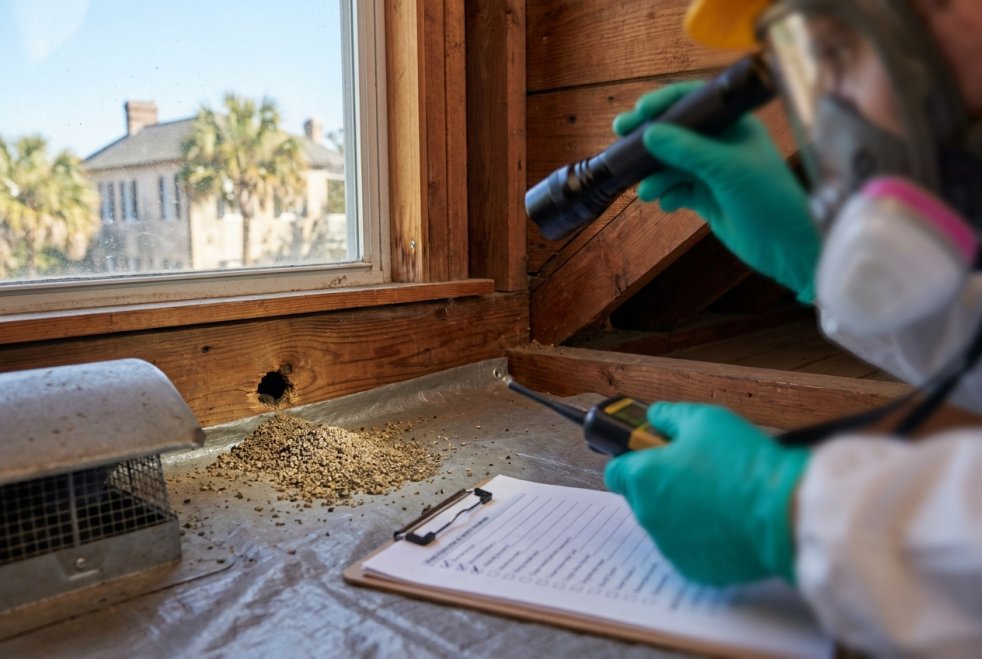
- Accumulation of small, dark droppings (guano) near entry points or inside the attic
If you notice any of these signs, do not ignore them. Bat colonies grow quickly, and the longer they stay, the more damage they cause.
The Real Risks of a Bat Infestation
Bats are not just a nuisance. They pose genuine health and structural risks that make prompt removal essential.
Bat guano accumulates rapidly and carries Histoplasma capsulatum, a fungal spore that causes histoplasmosis, a serious respiratory illness. When disturbed, dried guano releases spores into the air that can be inhaled by anyone in the building.
Bats are also one of the primary carriers of rabies in South Carolina. Direct contact is not always required for exposure. If a bat is found inside a living space, especially near a sleeping person, medical evaluation is often recommended.
Beyond health concerns, bat colonies cause real structural damage:
- Guano and urine saturate insulation, wood, and drywall
- Prolonged moisture damage can lead to mold growth
- Structural wood can weaken over time from repeated contamination
- Odors can permeate living spaces and become very difficult to eliminate
Why DIY Bat Removal Does Not Work
Attempting to remove bats on your own is not just ineffective, it can also be illegal. In South Carolina, several bat species are protected under state and federal wildlife laws. Killing bats or disturbing a maternity colony during pupping season (typically May through August) can result in legal penalties.
Professional bat exclusion uses one-way devices that allow bats to exit but not re-enter. This method is humane, legal, and far more effective than traps or repellents. After the colony has vacated, all entry points are sealed to prevent re-entry, and contaminated materials are safely removed and replaced.
What to Expect from Professional Bat Removal
A thorough bat removal process involves more than just chasing bats out of an attic. Here is what a complete service typically includes:
- A full inspection of the exterior and interior to identify all entry points and roosting areas
- Installation of exclusion devices timed to comply with seasonal regulations
- Sealing of all entry points after the colony has been excluded
- Safe removal and disposal of guano and contaminated insulation
- Sanitization and deodorization of affected areas
- A follow-up inspection to confirm the exclusion was successful
Skipping any of these steps leaves your property vulnerable to re-infestation and ongoing health risks.
Protect Your Property Before the Problem Gets Worse
Bat infestations rarely resolve on their own. The longer a colony stays, the more costly the cleanup and repairs become. Whether you own a home in Hanahan, a commercial property in North Charleston, or a rental in the greater Charleston area, acting quickly is the smartest move you can make.
Metro Wildlife & Pest Control provides expert bat removal and exclusion services for residential and commercial properties throughout the Charleston region. Our team understands local wildlife regulations and uses proven, humane methods to get bats out and keep them out.
Do not wait for a small problem to become a major one. Call (843) 484-6493 today to schedule an inspection and get a clear plan for protecting your property.